Your eye health,
from every angle.
From routine checks to cataract and retinal conditions, explore the examinations and follow-up care that fit your needs.
Explore by your needs
Choose a topic to see the relevant areas of assessment.
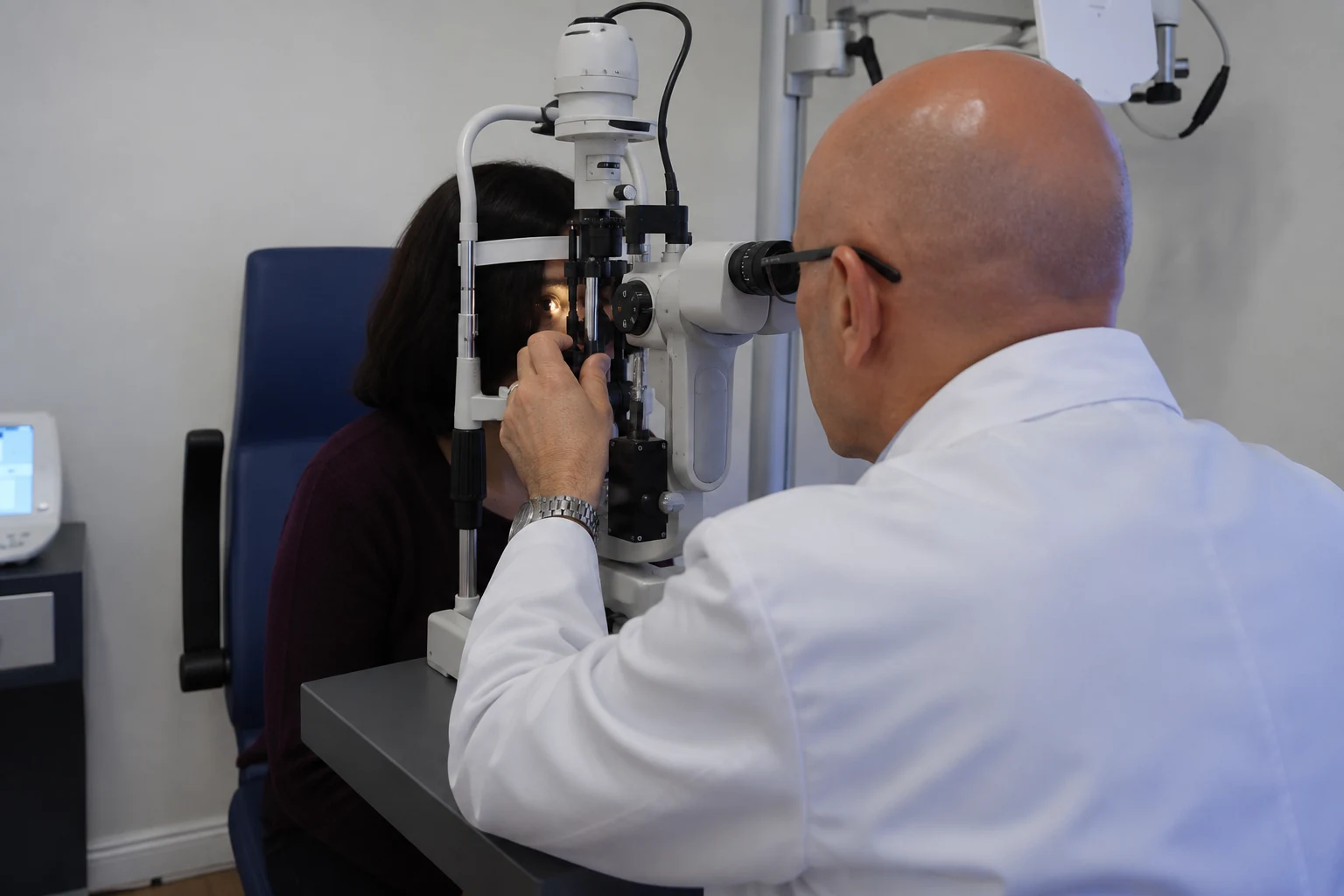
Comprehensive eye examination
A combined assessment of vision, glasses prescription, eye pressure and the back of the eye.
Learn moreCataracts & intraocular lenses
Assessment of blurred vision and glare, with planning for surgery timing and lens selection.
Learn moreDiabetes & eye health
Monitoring the effects of diabetes on the retina through a dilated examination and imaging when needed.
Learn moreMacular degeneration
Evaluation of reading difficulty, distorted lines and changes in central vision.
Learn moreGlaucoma & eye pressure
Assessment of eye pressure, the optic nerve and visual field, with an individual follow-up plan.
Learn moreRetinal conditions
A detailed retinal assessment for symptoms such as flashes, floaters or a curtain in the field of vision.
Learn moreLaser eligibility assessment
Assessment of the prescription, corneal thickness and eye structure for people considering alternatives to glasses.
Learn moreLaser treatments for eye conditions
Selecting the purpose and type of laser for retinal conditions, glaucoma and other eye conditions after examination.
Learn moreDry eye, cornea & contact lenses
Evaluation of the eye surface and tear film for burning, irritation, redness and contact lens discomfort.
Learn moreChildren’s eye health
Age-appropriate assessment of glasses needs, eye alignment and lazy eye.
Learn moreUveitis & eye inflammation
Assessment of the location and cause of inflammation in cases of redness, pain, light sensitivity and reduced vision.
Learn moreThese topics are a guide; diagnosis and treatment are determined after examination.
The first step: a comprehensive eye examination
A comprehensive eye examination is more than measuring your glasses prescription. Visual acuity, refractive errors, the anterior segment of the eye, intraocular pressure and, when needed, a dilated fundus examination are evaluated together. Additional imaging or tests may be planned depending on the patient's age, existing conditions and complaints.
Regular examinations can help detect early problems that may progress without symptoms, such as glaucoma, diabetes-related retinal changes and macular degeneration. The interval between checkups is not the same for everyone; it is set according to the examination findings and personal risks.
Not sure which examination you need?
Let’s discuss your concerns and plan an appropriate assessment.
Frequently asked questions
How often should I have an eye examination?
The interval between checkups depends on age, existing eye diseases, systemic conditions such as diabetes and high blood pressure, and family history. The interval that is right for you is determined after an examination.
Is a cataract painful?
A cataract usually does not cause pain, burning or stinging. The most common symptom is reduced and blurred vision; faded colors and glare from lights may also occur.
Can a cataract be treated with eye drops?
There is no proven eye drop treatment that removes a cataract. The treatment for a cataract that affects vision and daily life is surgery.
Is every eye suitable for laser?
No. Eligibility cannot be decided without evaluating, in addition to the eye's prescription, the structure of the cornea, whether the prescription has stopped progressing, the ocular surface and retinal findings.
Can diabetes affect my eyes without causing symptoms?
Yes. Diabetes-related retinal changes can progress at first without reducing vision. For this reason, having an examination only when complaints appear is not enough. People with diabetes should have examinations at regular intervals, even if they have no complaints.
If my eye pressure is normal, does that mean I cannot have glaucoma?
The assessment of glaucoma is not based on a single intraocular pressure measurement alone. Optic nerve, corneal thickness, visual field and OCT findings are interpreted together.
Are new flashes of light and floaters important?
Especially if they started suddenly, have increased in number or are accompanied by a curtain-like shadow in the visual field, they should be evaluated for a retinal tear without delay.
Can I reuse eye drops that helped me before?
The same symptom can be caused by different diseases. It is not right to use old eye drops, or drops belonging to someone else, without a doctor's advice.
Can a child have an eye examination before learning to read?
Yes. Children's vision can be assessed with age-appropriate methods; there is no need to wait for a child to learn to read before an examination.
Does screen use permanently damage the eyes?
Daily screen use can cause dryness, stinging and temporary blurring because we blink less. Taking regular breaks and using a suitable viewing distance and room lighting helps reduce complaints.
Let’s keep talking about eye health.
Your eye health questions, short videos and the latest updates. Follow my Instagram and Facebook accounts to discover new content.
 Prof. Dr. Muhittin TaşkapılıOphthalmology and Eye Surgery